
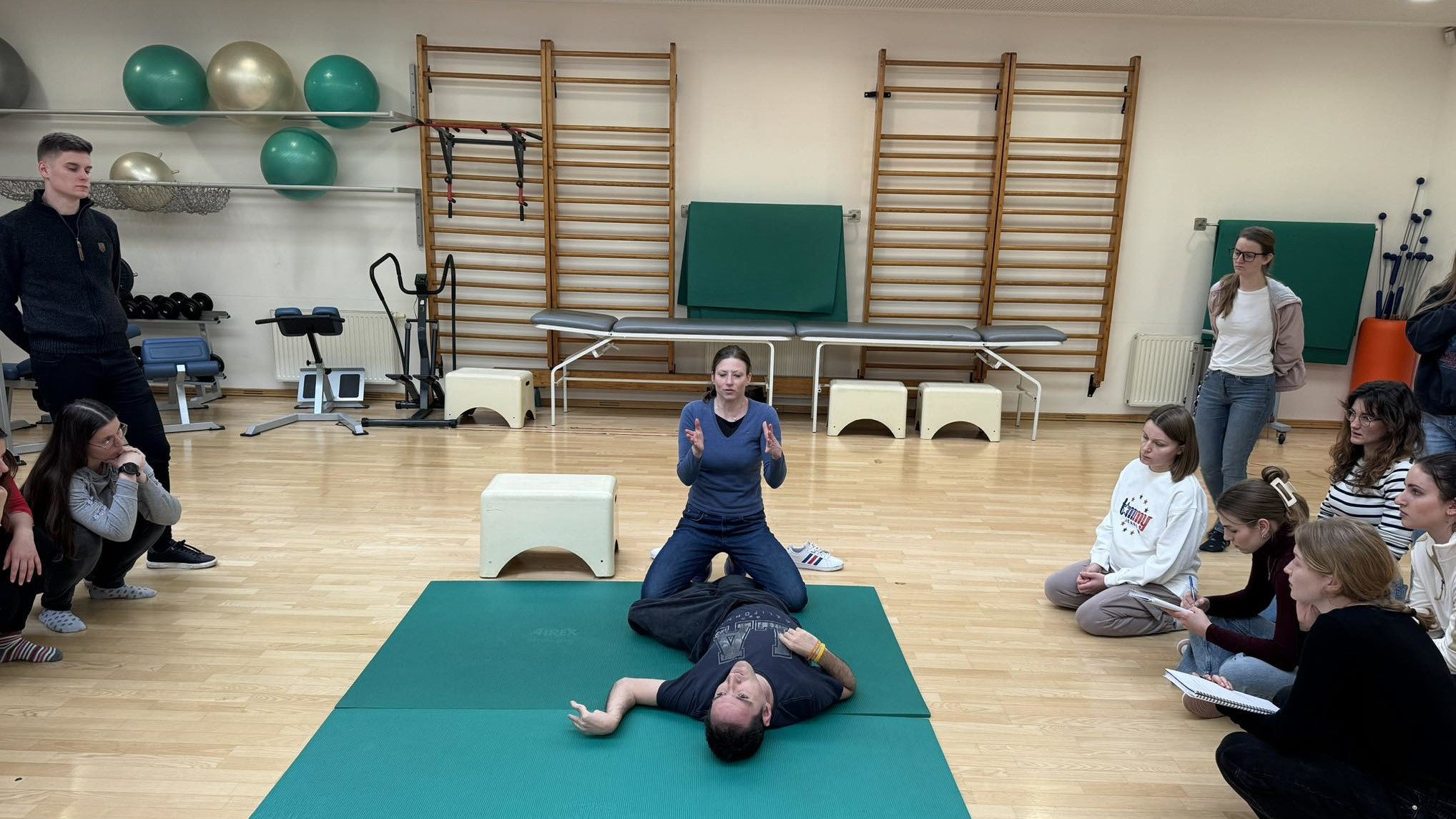

I said that I would write about my life and social issues, so it is time to begin. Anyone who knows me knows that in recent years I have often stressed the urgent need for access to high-quality, highly specialised therapies and treatments for both children and adults with disabilities. This subject will appear often on the website, so it is a fitting place to begin.
Anyone who knows me already knows this; anyone who does not may be surprised. But it needs to be stated clearly somewhere: despite my needs, there are essentially no therapies available to me. People are surprised when I explain that, despite disability, numerous organizations and the possibilities offered by the welfare state, there are no genuinely focused, high-quality treatments or ongoing monitoring of my condition that would address my needs comprehensively and regularly. Not so that I might walk, but so that in the years ahead I could at least maintain my condition, perhaps have one less aching muscle as I grow older, and function as an active adult—which matters increasingly to all of us, because the modern term for it is inclusion. We therefore have inclusion, the necessary medical devices and personal assistance, and we are improving accessibility; all of this is necessary, and in fact we are doing reasonably well in these areas. Yet somewhere the system breaks down. At some point, a personal assistant may no longer be able to seat me, or I may no longer be able to sit even with assistive devices, because my body may have become contracted into a pathological, incorrect position that regular and, above all, specialized physiotherapy treatment could have prevented. This is not merely therapy; treatment is actually the more accurate term, because it should involve comprehensive work with and monitoring of a person with a disability, tailored to the specific disability and the person’s needs. I am, of course, explaining this terminology entirely as a layperson, but it is precise enough for the purposes of this post.
But let us be more precise about the heart of the problem: there is no systemically organized treatment for adults. Let us therefore start at the beginning. Children with developmental difficulties are monitored and guaranteed at least a certain number of specific treatments within the public healthcare system. For a moment, let us set aside the concern that even children receive too few treatments and that not all of them may be of equal quality. We all understand that these treatments are essential for children, for their development and their future. When a child has a problem, we are all sensitive to it—myself included, which is why I also help families with children. As I have said, difficulties exist here too, but a certain system and form of monitoring are in place—again, because a child’s development and future are at stake…
Let me make it clear that I am not a middle-aged person who merely complains that he did not receive the right attention and care in his youth, or that this or that was missing. Quite the opposite: I had a wonderful childhood, a family and friends, and just the right amount of treatment and therapy. Those therapies did not enable me to walk, because that was not possible, but professionals and my family monitored, supported and encouraged me. All of that was available while I was a child and at school. Even today, not everything is wrong or unjust; it is simply different.
Then the child to whom we previously provided every possible treatment—as is proper and right, so that the child can become as independent as possible—grows up and becomes independent. Everyone is pleased about that independence, and because the person is disabled, they are entitled to this and that, and everything seems excellent. We have achieved inclusion. Yet despite all the assistive devices and opportunities for independent living, this now-adult and independent disabled person is not actually entitled to one of the crucial treatments that might also make some other aspect of independence easier. That treatment is regular, specialized physiotherapy—in my case, neurophysiotherapy. Once someone is no longer at school or in an institution where such treatment happens to be provided routinely, they are no longer automatically entitled to it: no one monitors them any longer, they live independently, and we do not know what they truly need or who might still work with them in depth. Disabled adults now have quite a few options and mechanisms for independent living and work, but one of the most fundamental is missing. In light of what has been said, the situation may still seem somewhat logical. But it is not good for the independence for which we fight so hard. It must therefore be stated clearly that this is not properly regulated and that it must be corrected if we want genuine inclusion rather than inclusion that merely enhances an institution’s reputation.
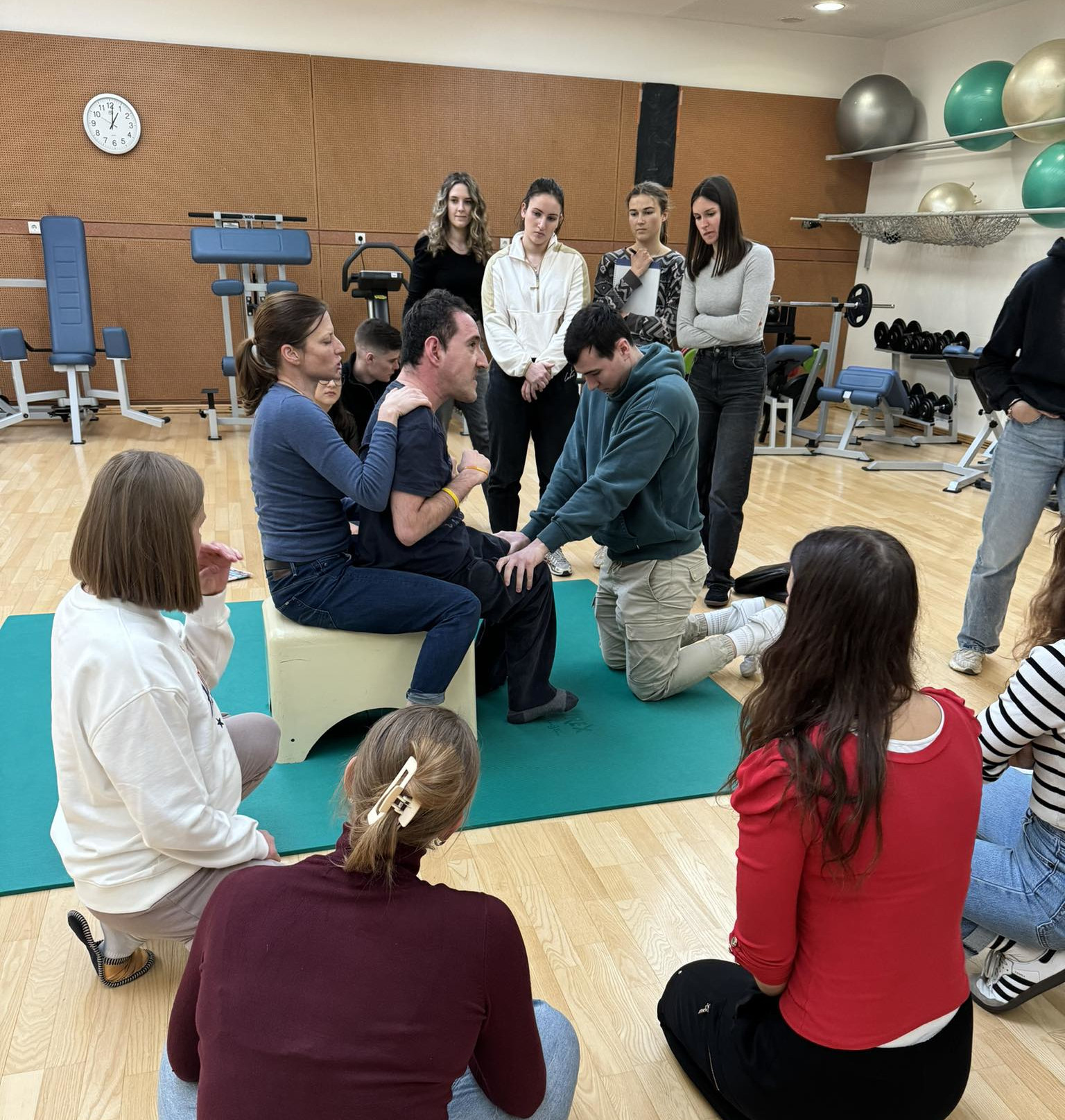
Now you will say to me: “But how is that possible? Surely disabled people are entitled to it. Children receive it, don’t they? So-and-so went here and there… Perhaps you simply did not look into it properly.” I may indeed have overlooked something somewhere, and I am not claiming here that I alone am entirely right. I am merely describing my own situation, so let me continue… Children have their own developmental paediatrician, who examines them at least every few months, moves and measures them, and prescribes what they need. Some institute prescribes me a wheelchair every few years, perhaps another assistive device as well, and then nothing happens again for several years… Meanwhile, doctors within the same institution change, and once again no one knows me. Specialized neurophysiotherapy treatment is even defined somewhere. Yet most therapists would not provide it to an adult patient because it is physically demanding. I readily admit that this is true, but just as a therapist must not injure their back because of me, I too have a right to health, a healthy environment and movement. However, it has not been determined who is responsible, how such treatment should be provided, or why. Everyone then assumes that treatment is complete and that there will be no new outcome in my case—no crawling or walking after 42 years—so no one knows what therapy actually does for me. Most interestingly, even the professionals themselves do not realize that this form of care effectively does not exist. For the same reasons, I am not entitled to rehabilitation at a health resort or even to a therapeutic exercise mat for exercising at home with an assistant who is not trained, although she has seen the problem and has to understand it better than others. Treatment is deemed complete, there will be no result for the major stakeholders, my difficulty is no longer as visible, and that is where matters end. Even if I were to receive a few hours of physiotherapy a year, it would not be specialized treatment that explored my needs in depth. Most likely, it would consist of a few hours with a therapist who means well and understands what she should do with me, but does not know me and has no similar patients. We would therefore spend those few hours or visits merely establishing what I need; then the referral would expire, and the young therapist would in any event be too physically weak to use all of her limbs to block most of mine and elicit the correct movement pattern.
And again you will ask: “What about the associations?” I am sorry, but they deliberately do not deal with this because, in reality, they cannot. During the summer, many associations organize rehabilitation camps and similar programmes, where we encounter a problem much like the one described above. Experienced therapists go on family holidays, while physiotherapy students who want to help come to these camps. Most have no experience with people with severe disabilities, yet they are thrown into working with fifteen such people. One or two students are supposed to deal with all of this in a single week, restore everyone’s health, allow the association to record that outcome, and justify someone paying for it. I understand that the effect cannot be substantial, and I do not condemn anyone. But please, dear officials, do not claim that such an effect exists. It does not, and it cannot be achieved in one week.
In a way, I understand them all. I merely want to explain why I prefer to organize things in my own way, sometimes even through somewhat unfinished ideas for one form of exercise or another. There are several disabled adults like us who are therefore left to privately funded solutions on the market. Even there, only rare exceptions understand this at least in part. I understand that it will never be possible to cover everything for everyone, and I do not wish to criticize without justification all those who make an effort and do good work. I am not trying to establish who is to blame or to claim that everything is wrong. I am simply saying that the problem has many layers and that it is not enough for someone to have heard that a disabled person is entitled to something. I understand that it is not entirely clear how or why, and that a perfect solution may genuinely not be possible—but the problem should at least be addressed somehow.
In the end, we must call things by their proper name. It is right that children receive treatment to support their development and future. But once they become adults and are no longer monitored by the same services, treatment may disappear or become far too difficult to access. Children are not the only people who need it. Without continued support in adulthood, much of the effort invested during childhood can be lost.
At the very end, we therefore discover that this is not about special needs. A person without a disability does not go to the gym because of some special need or goal, but because they feel good after physical activity, enjoy it, strengthen particular muscles and no longer have back pain. That is not called a special need; it is called movement or even sport. My therapeutic exercise is not merely sport, but it is also more than physiotherapy. I need professional treatment, which is supposed to be complex and more expensive. Ultimately, however, we can see that the subject is not really physiotherapy or disability at all, but perhaps movement. Perhaps it is about inclusion, which has almost become an obligation? Yet the author of this very post cannot type effectively unless he is prepared for it. If the author types, it means that he works… And if he works, perhaps he looks forward to 1 May, Labour Day, because he realizes that he is active. Professional physiotherapy treatment prepares him for that. So perhaps this post is not about physiotherapy at all, but about the first of May?
So now you know. Whenever you see one of my appeals to raise money for physiotherapy through the At the White Hawk Society for Personal Support, it is not simply because too few therapies are available. Support for disabled adults is poorly organised. If we do not improve it, inclusion itself will remain incomplete. That is why the Society will continue supporting children and adults who need these services. I am therefore adding a link for donations to At the White Hawk Society for Personal Support. We will not solve everything, but we may help someone build a better future.
Thank you!